Events in Algarve in November and December
If you are planning to make a great trip in November/December to the wonderful Algarve you will definetely want to know this awesome events that are taking place here. More »
9 perfect tourist attractions to visit in Portugal this summer – Part 3
Dear friends, we are back with the 9 perfect tourist attractions to visit in Portugal this summer – Part 3 sees us going through the last three attractions of choice on our More »

9 perfect tourist attractions to visit in Portugal this summer – Part 2
We have finally come to the essential: Part 2 of the 9 perfect tourist attractions to visit in Portugal this summer brings us to the seaside, the sunny, brilliant, shimmering shores of More »

10 Places not to miss in Portimao – Part 1
Summer is here and it is the very best time to be in Portugal, by the ocean, drinking a cocktail and reading a good book on the rocky beaches. Today we give More »

The golf season in Algarve is on! – Part 2
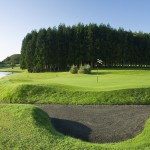
The golf season in Algarve is on! Spring is probably the best time to practice golf: picture an endless green field surrounded by the blue waters of the Atlantic, the mild More »

The golf season in Algarve is on!
Dear friends in love with 2 things: Algarve, Portugal and golf, we have great news for you. The golf season in Algarve is on! The sunny shores of southern Portugal are More »

Did you know golf…
Did you know golf is one of the most popular sports in Portugal? In fact, the sunny shores of the southern part of the country are the some of the welcoming regions More »
A romantic Valentine’s Day in Portugal – Part 3
From a romantic Valentine’s Day in Portugal we got to explore some of the most wonderful corners of this beautiful country. It might be interesting to remind that February is a pleasant More »
Algarve food and drink – The hills and the mountains
In our look into Algarve food and drink we’ve reached the final major geographic region, namely Algarve’s stretch of hills and mountains.
This region of the Algarve is quite limited, it acts as sort of a natural borderline between the Algarve and the Alentejo region to the north, and as we’ve seen with the other parts of the Algarve, this part of Portugal has also adapted its gastronomy to the most easily accessible ingredients, but it did this without losing the marvelous flavors of the south.
Lesser known Algarve destinations

We usually talk about the major Algarve attractions but today we’ll be taking a look at some lesser known Algarve destinations and locations.
Estoi
This small town is located at only about ten kilometers from Faro, so easily reachable on any day of your holiday, and it is filled with many examples of traditional Algarvean country architecture.
Golden discovery in Sagres waters
We don’t talk enough about the wonderful diving opportunities that the Algarve coast has to offer diving enthusiasts, and today we’ll talk about one incredible golden discovery that some professional divers made off the coast of Sagres.
Divers from the Divers Cape centre in Sagres managed to trace the remains of a wreck that they believe to be the 17th century boat of Pedro Diaz. They also say that this wreck was varying gold when it was shipwrecked in the port of Baleeira, in 1608.
Ocean Revival project starts off with a couple of bangs
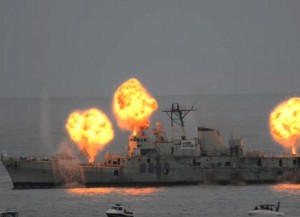
On Tuesday, October 30, two old warships were purposely sunk, off the coast of Alvor, thus marking the beginning of the Ocean Revival project.
Four explosives were used to sink the Oliveira e Carmo corvette – a disused warship – while dozens of other boats, both commercial and private, filled with onlookers, observed from at least half-a-mile away. It took two minutes and twenty-one second to sink the old corvette, three miles off the coast, where a pioneering underwater museum will be created.
Algarve food and drink – The Intermediate Region

Today we’re continuing our look into Algarve food and drinks, and since we talked about the coast last time, today we’ll be looking at the intermediate strip of land which marks the transition between the coast to the south and the hilly region to the north, this region is known as the ‘Barrocal’ region.
Religious destinations in Portugal – The Batalha Monastery
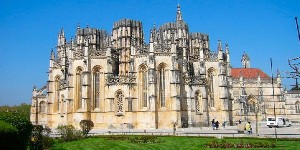
Today we’re going to talk about a particular religious destination in Portugal.
The Batalha Monastery
As it was custom during the Middle Ages, some rulers of Europe used to build churches or monasteries in order to give thanks for a military victory, such is the case with the Batalha Monastery built after a 1385 battle in which King Joao’s army was outnumbered by the Castilians and still managed to win – ‘batalha’ actually means battle in Portuguese.