A taste of the Algarve: Best dishes
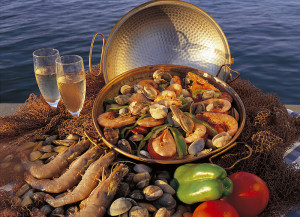
The cuisine of a certain realm tells much about its roots, destiny and spirit. The breathtaking landscape, with high cliffs emerging from the shore of the blue Atlantic Ocean and with entwining hills and steep valleys, but also the specific lifestyle offer a taste of the Algarve that is both sweet and melancholy.
With the Ocean so close, the destiny of the Algarve has always been linked to its gentle waves. Most of the prominent cities in the region used to be fishermen’s villages long ago. So seafood is part of the local culinary culture of not only the southern area, but of the entire Portugal.
Seafood is prepared into the most varied dishes, but the simplest and perhaps most tasty are the plain oysters, clams or donax fried in a frying pan together with rice or fruit and vegetables. And cuisine enthusiasts will be thrilled to know that there are seafood festivals held frequently in Olhao and Faro.
Fish is another important component of the Algarve cuisine. Each region (or city) has its own specific dish. In Portimao, for instance, grilled sardines and the skinned horse mackerel (or carapaus alimados) can be found everywhere, while tuna steak is a specialty of Tavira and the best cooked octopus can be tasted in Santa Luzia.
But what happens if one is not a fish fan, you may ask? The Moorish occupation in the middle ages followed by their cohabitation with the Europeans in these realms (both in Portugal and in Spain) has left long-lasting marks, and not only in architecture. Cakes and sweetmeats, but also several types of meat dishes remind of the unmistakable flavour of the Orient. Xarem is also an example of this interculturality, a dish which consists of maize meal and shellfish.
Once upon a time, in the age of discoveries, when Portugal was a great colonizing empire, the Portuguese were the first to bring spices and ingredients like pepper, ginger, coffee, coriander, ginger, saffron, tea, rice, peanuts, tomatoes or potatoes.
There is also much to be said about the Algarve beverages, but we will leave this subject for a future chapter.